AML software for law firms in regulated transactions
SimplifiAML helps you manage anti-money laundering compliance when your firm takes part in property transactions, company formation or managing client funds: sanctions and PEP screening, beneficial owner, records and audit trail. Affordable software that automates the day-to-day without replacing the lawyer’s judgement.
Art. 2.1.ñ
Lawyers in covered transactions
€60,000
Minimum fine for a serious infringement (Art. 57)
10 years
File retention (Art. 25)
Are you an obliged entity? Law firms
Lawyers, procuradores and other independent professionals are obliged entities when they take part in planning, carrying out or advising on transactions for clients involving the purchase or sale of property or businesses; managing funds, securities or other assets; opening or managing bank, savings or securities accounts; organising contributions to create, run or manage companies; or creating, running or managing trusts, companies or similar structures — and when they act for clients in any financial or property transaction (Art. 2.1.ñ). The obligation covers those specific transactions, not all of the firm’s work.
AML obligations for law firms: the real exposure
SEPBLAC may inspect any obliged entity, including firms that take part in transactions covered by the law (Art. 47). Serious infringements carry fines from €60,000 (Art. 57), and partners can be held personally liable (Art. 54).
Serious fines from €60,000
Failing to identify the client or to document due diligence in property or corporate transactions can amount to a serious infringement (Art. 57).
Personal liability of partners
A partner or director of the firm can be sanctioned personally if the infringement is attributable to them (Art. 54).
Transactions with sanctioned parties
Acting in a transaction with a client on the OFAC or EU lists without screening them is a serious due diligence risk.
Beneficial owner in corporate transactions
When forming or managing companies for clients, you must identify the beneficial owner who owns or controls more than 25% (Art. 4) and apply enhanced due diligence to PEPs (Art. 14).
AML obligations for law firms
- ✓Identify the client before property or corporate transactions (Art. 3)
- ✓Identify the beneficial owner of client legal entities (Art. 4)
- ✓Understand the purpose and, where appropriate, check the source of funds (Arts. 5 and 6)
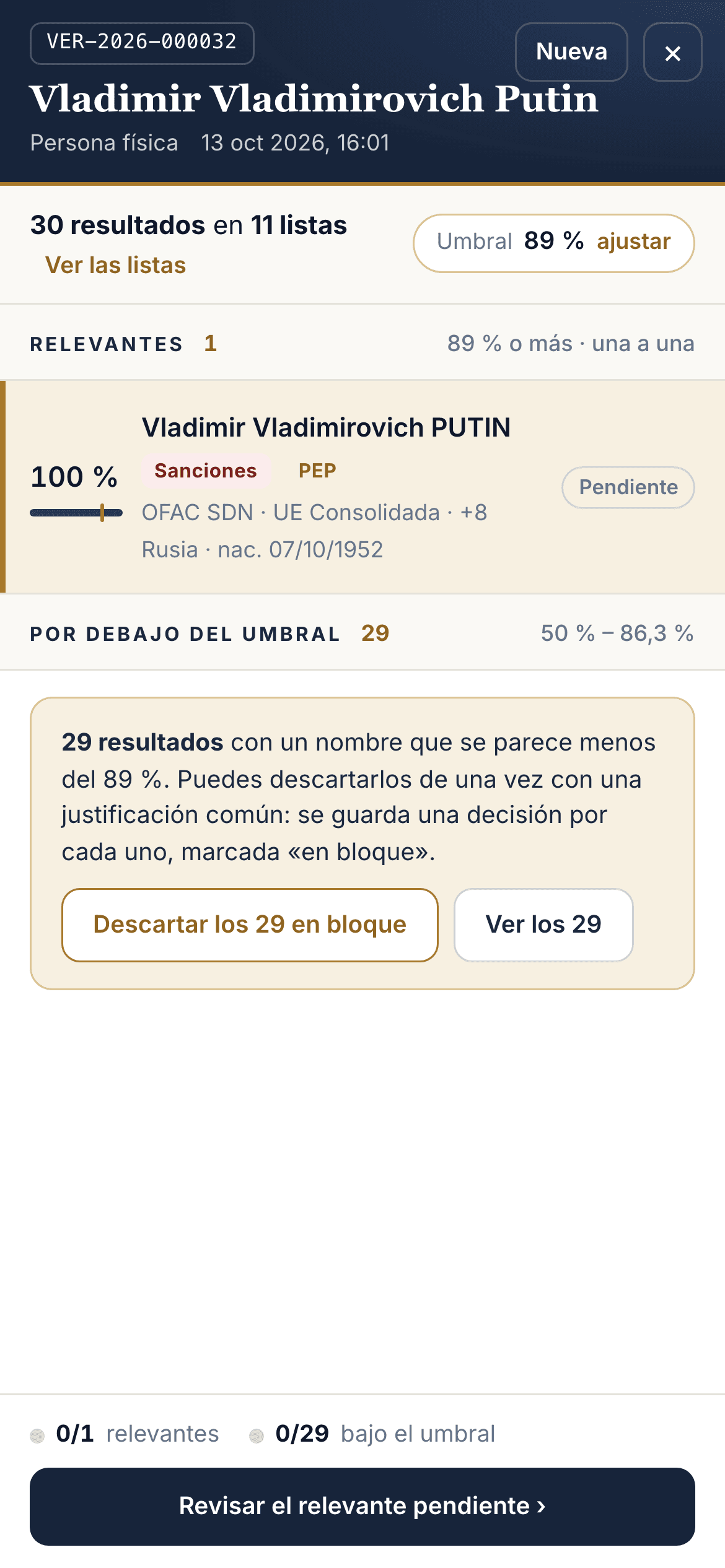
- ✓Screen against sanctions lists, PEPs and their family members and close associates
- ✓Apply enhanced due diligence to PEP clients (Art. 14)
- ✓Report suspicious transactions to SEPBLAC (Art. 18)
- ✓Keep the documentation for 10 years (Art. 25)
AML automation
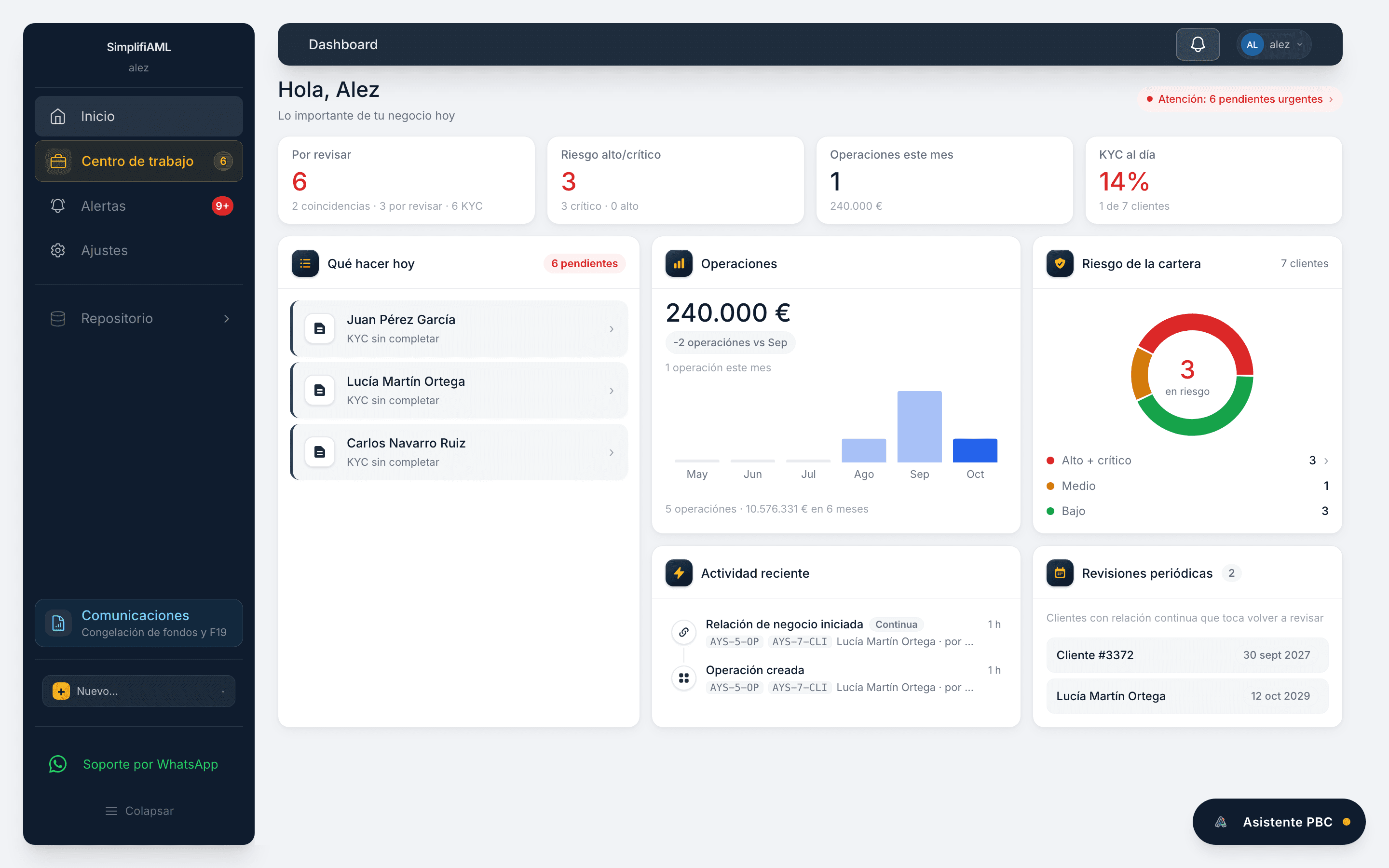
How the software helps law firms comply
- →Automatic screening before every covered transaction
- →Beneficial owner records for corporate structures
- →A file for every client and transaction, with a full audit trail
- →Alerts on new designations on OFAC, EU and other lists
- →Multi-user access for partners and the firm’s team
From €39/month · No lock-in
What the software automates and what remains yours
The software speeds up screening, records and documentation in the transactions where your firm is an obliged entity. Legal judgement, due diligence decisions and professional responsibility remain with the lawyer and the firm.
What the software automates
- ✓Screening against sanctions lists, PEPs and close associates by transaction or client
- ✓Record of identification, beneficial owner and document trail
- ✓Structured files, exportable for inspection
- ✓Alerts on changes to international lists
What remains yours
- →Assessing the transaction risk and deciding the applicable due diligence
- →Deciding whether to report to SEPBLAC
- →The AML prevention manual and internal organisation, where the rules require them of the firm
- →Reviews by an independent third party, where the law requires them
- →Final responsibility as an obliged entity and the lawyer’s professional duties
Operational AML for your firm, without outside consultants for every case
Guided onboarding. No technical team. No lock-in.
Book a demoNo commitment · Free demo · In English or Spanish